
Cyberattacks are becoming more sophisticated, and the cryptocurrency industry is facing some of its biggest security challenges yet. Here is what is happening, why the threats are growing, and how FROGEN is approaching the protection of its community, digital assets, and infrastructure.
The cryptocurrency industry is going through a difficult period for cybersecurity. Major exchanges have suffered enormous losses, decentralized platforms have faced sophisticated exploits, and attackers are increasingly targeting the software, infrastructure, and people behind digital assets. The scale of these incidents is a reminder that even established organizations with considerable resources are not immune to security failures.
At FROGEN, we have been following these developments closely while continuing work on our own platform and technical infrastructure. The same technologies that make blockchain powerful also create responsibilities that cannot be ignored. When transactions involve assets that can move across borders in seconds, a single compromised credential, malicious software update, or overlooked vulnerability can have consequences far beyond the original point of attack.
For the Frog Crew, we believe it is important to understand both sides of this situation: what is happening across the industry and what responsible security practices look like within the FROGEN ecosystem. Security is not something a project can simply announce and consider finished. It is an ongoing responsibility that becomes more important as the ecosystem grows.
The Cybersecurity Threat Is Bigger Than Crypto
Cybercrime has evolved considerably from the days when most attacks involved simple phishing emails or attempts to brute force passwords. Modern attackers target software dependencies, cloud environments, administrator accounts, financial infrastructure, and the connections between otherwise legitimate services.
The 2026 Microsoft Digital Defense Report, published on October 1, describes how artificial intelligence is accelerating several stages of cyberattacks, including reconnaissance, phishing, vulnerability discovery, and malicious software development. Criminals are finding ways to automate work that previously required considerably more time and technical expertise.
That does not mean AI is responsible for every major breach. Many successful attacks still rely on familiar weaknesses, including stolen credentials, outdated software, excessive account permissions, and human error. What has changed is how efficiently those weaknesses can be discovered and exploited.
Cryptocurrency introduces another challenge. Once a blockchain transaction is confirmed, it generally cannot be reversed simply because the sender was tricked or the transaction was unauthorized. Recovery may sometimes be possible through freezing certain tokens, cooperation with exchanges, or legal intervention, but these options depend on the assets and circumstances involved.
For attackers, that combination of valuable digital assets and difficult recovery processes creates a powerful financial incentive.
Recent Crypto Hacks: What the Industry Is Learning
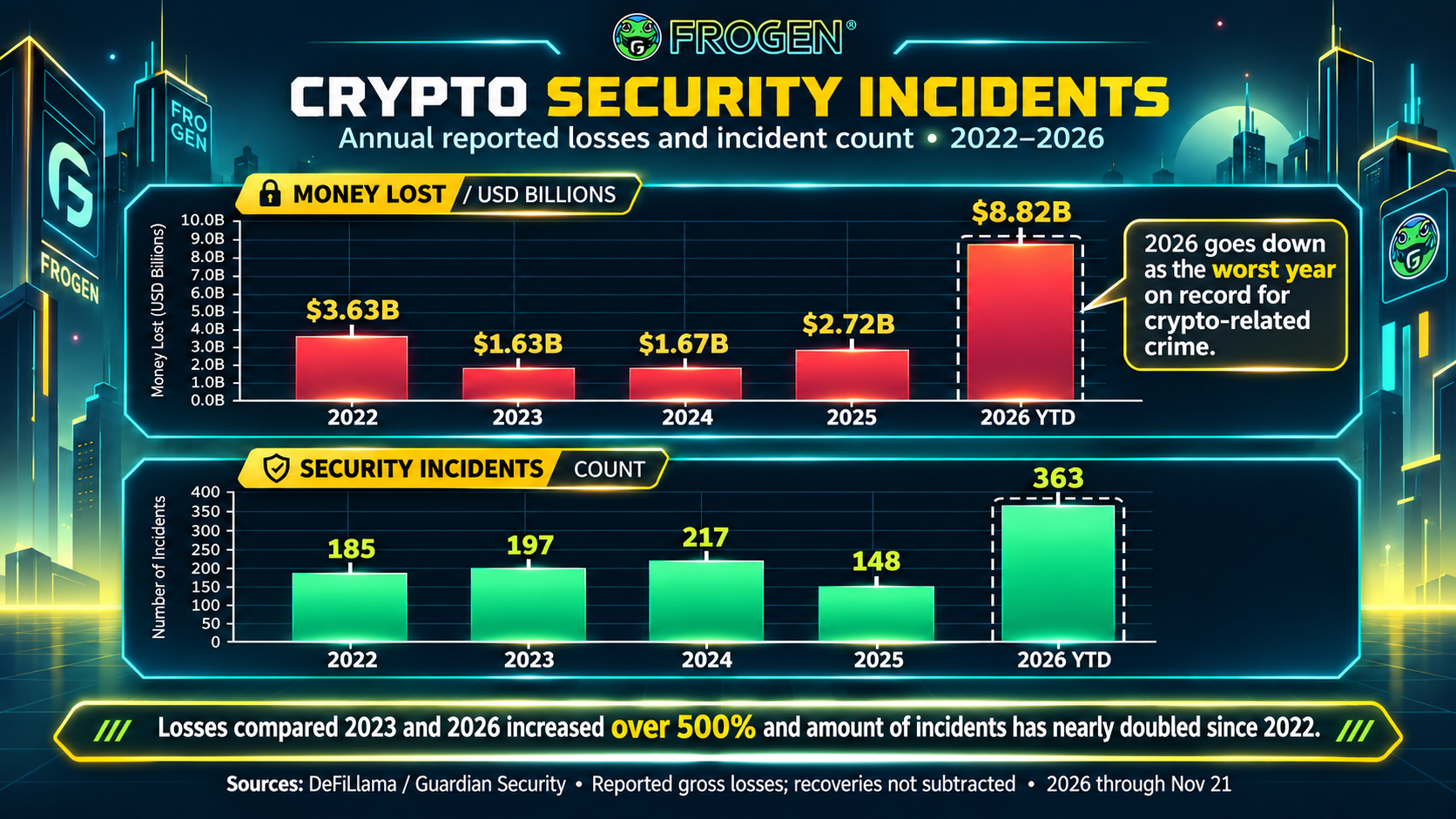
Reported incident values are approximate. Figures reflect information available as of November 22, 2026; assessments may change as investigations progress.
The events of 2026 have shown how significant the consequences of security failures can become.
On October 29, Binance suffered what investigators described as the largest cryptocurrency theft on record. Approximately $6.3 billion in digital assets was stolen from exchange-operated wallets across multiple blockchains, according to Reuters. Blockchain intelligence company Chainalysis subsequently attributed the attack to TraderTraitor, a cybercrime group linked to North Korea, based on its investigation of on-chain activity.
By November 18, the case had progressed to international asset-recovery proceedings. Reuters reported that an Abu Dhabi court had ordered several cryptocurrency companies to maintain freezes on assets associated with the theft. The incident demonstrates both the scale of modern crypto crime and the complexity of recovering assets after a compromise.
Other major breaches reveal different vulnerabilities. In September, Bitget experienced a loss estimated at approximately $388 million through compromised credentials, while Liquid Network suffered a software vulnerability affecting roughly $320 million in Bitcoin, according to Immunefi's 2026 incident research.
Brazilian exchange Mercado Bitcoin also reported a security incident on November 2, with initial reports estimating losses above $40 million. The company stated that it would protect customers from financial losses and that customer data had not been exposed. Subsequent blockchain analysis reported differing estimates of the total affected assets, illustrating how incident assessments can change as investigations continue.
These are not all examples of the same technical failure. Some involve compromised credentials and signing authority. Others involve software vulnerabilities, operational systems, or the infrastructure connecting different parts of a platform.
The broader figures reinforce this concern. In its third-quarter 2026 security report, Hacken recorded approximately $1.18 billion in losses across 107 incidents. Of those losses, 48.2% were attributed to smart contract and protocol code, while 40.4% involved access control and operational weaknesses.
This distinction matters because protecting smart contract code is only one part of protecting a cryptocurrency project. The surrounding systems, development processes, administrative privileges, and software dependencies require attention as well.
Why Are These Attacks Happening Now?
Several developments are making the cybersecurity environment more challenging.
The first is the increasing sophistication and scale of attacks. Criminal groups can coordinate operations across countries, automate parts of the exploitation process, and move stolen funds through numerous blockchain networks. Artificial intelligence is making some of these activities faster, but the fundamental objective remains unchanged: gain unauthorized access to something valuable.
The second is the growing complexity of digital infrastructure. A cryptocurrency platform may depend on wallet integrations, payment processors, cloud services, open-source software, external APIs, and blockchain networks. Each connection introduces a dependency that needs to be understood and maintained. A weakness in one service can sometimes expose other parts of the system, even when their underlying code is functioning as intended.
The third is the financial value concentrated in digital asset platforms. Exchanges, custody systems, treasury wallets, and decentralized protocols can hold significant assets. This makes privileged accounts, transaction authorization processes, and software deployment systems especially attractive targets.
There is also an important difference between preventing an attack and containing its consequences. Some organizations discover problems quickly enough to stop further losses. Others identify vulnerabilities only after significant damage has already occurred. Strong security therefore requires preparation for both possibilities.
For FROGEN, these industry lessons are directly relevant to how we approach software development and platform operations. We cannot assume that a system is protected simply because a particular component has been reviewed or because its design appears sound.
How FROGEN Is Approaching Security
FROGEN was created to combine the accessibility of fun culture with more carefully engineered blockchain infrastructure. That philosophy of not overcomplicating things also shapes our approach to security: document the system, examine its assumptions, make important constraints verifiable, and avoid treating unfinished work as completed protection.
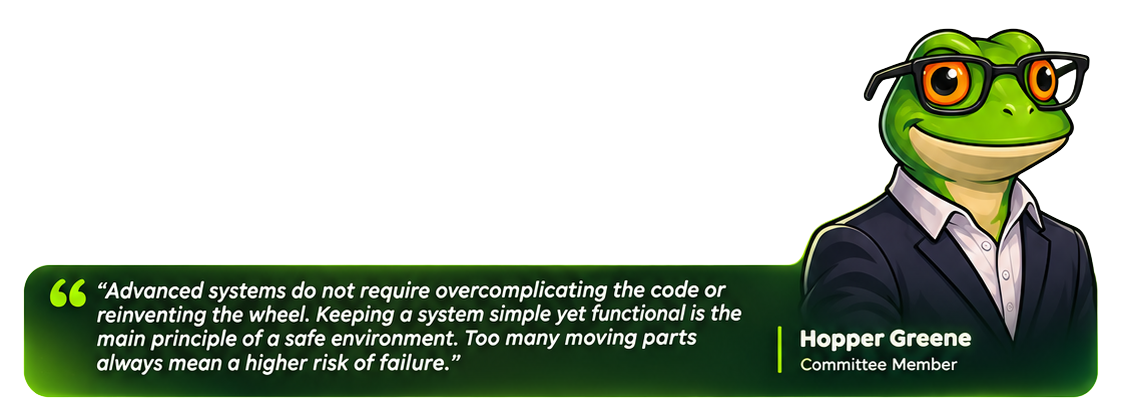
Committee member Hopper Greene's comments regarding this are simple: "Advanced systems do not require overcomplicating the code or reinventing the wheel. Keeping a system simple yet functional is the main principle of a safe environment. Too many moving parts always mean a higher risk of failure."
Our published documentation provides several concrete examples of this approach, covering protocol design, development practices, customer privacy, and community reporting.
Protecting the Treasury and Smart Contract Infrastructure
Protecting digital assets begins with understanding who or what can control them.
For a cryptocurrency project, the risks extend beyond vulnerabilities in the token contract itself. Treasury access, signing authority, administrative privileges, and deployment permissions are all important parts of the security model. If an attacker compromises a privileged system, the consequences may be serious even when the underlying token economics work exactly as designed.
FROGEN's specification-first development process is intended to address part of this challenge before deployment. Our published technical documents define contract responsibilities, permitted operations, system constraints, and the interactions between the different components of the protocol.
The planned architecture includes bounded governance permissions and an emergency pause mechanism intended to limit certain activity if a critical vulnerability is discovered. These protections are described in the protocol specifications and remain subject to implementation, testing, and independent security review before they can be treated as verified deployed safeguards.
This distinction is important. A documented design demonstrates what the system is intended to do, while a completed security audit and verifiable deployment provide evidence about how the implementation actually behaves.
In May 2026, we began making our protocol specifications publicly available through GitHub, allowing developers and technically experienced community members to examine the intended mechanisms and identify potential problems before the formal audit stage. Our published audit roadmap also includes independent smart contract security assessments.
The protection of treasury assets must be considered alongside that work. Contract design, wallet permissions, operational access, and transaction authorization serve different security purposes, and none should be assumed to replace the others.
Our priority is to make security decisions that can be tested and substantiated rather than offering guarantees that no responsible project can make.
Protecting Customer Data and Privacy
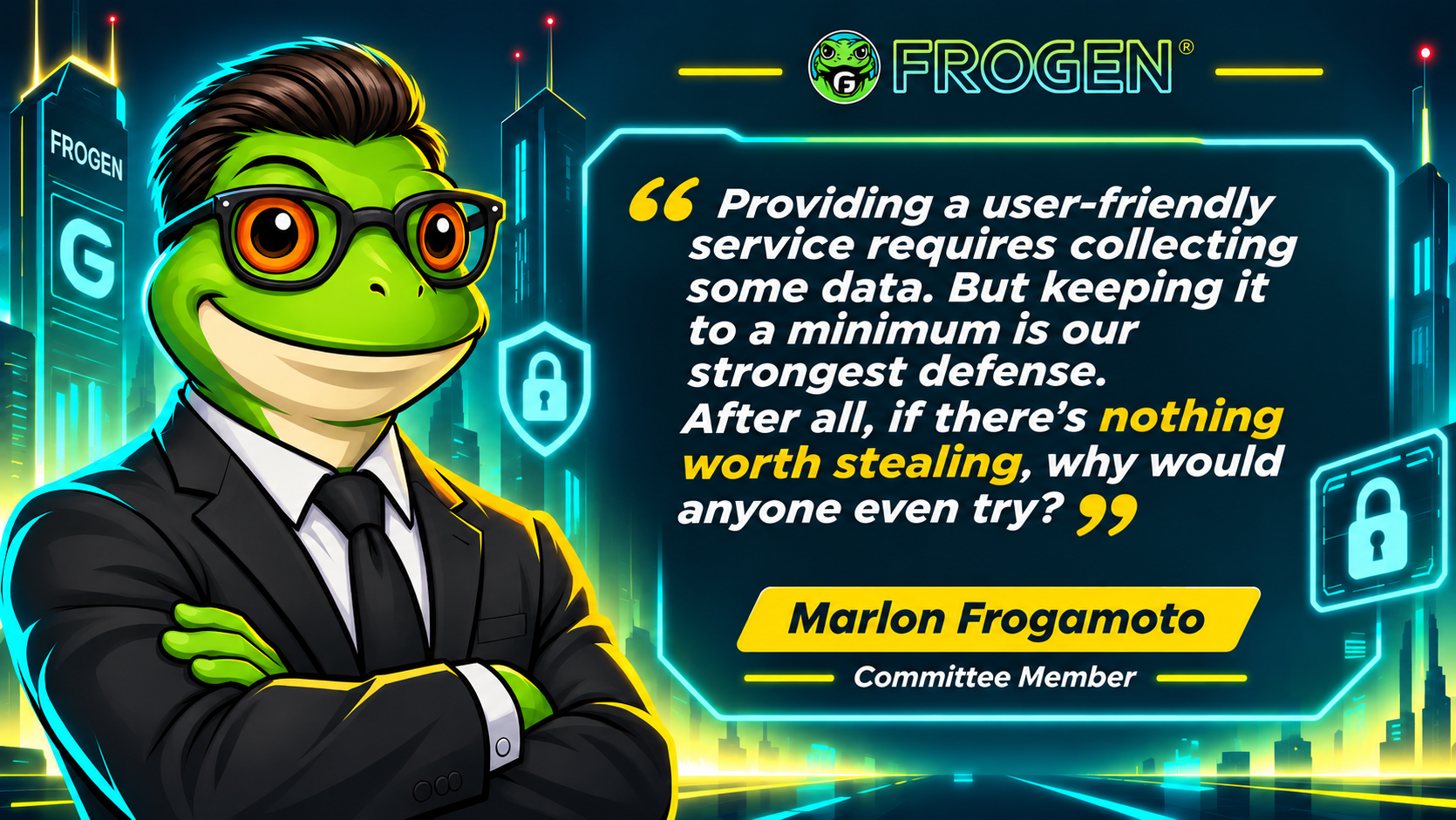
Security is not limited to cryptocurrency balances. The information associated with users and their activity also deserves careful handling.
FROGEN's published Privacy Policy describes an approach centered on limited data collection. Depending on how someone interacts with the platform, relevant information may include a public wallet address, connected wallet provider, submitted email address, on-chain transaction activity, and technical browser or device data.
The policy also states that FROGEN does not collect wallet recovery phrases or private keys. These credentials should remain under the user's control and must never be shared with anyone claiming to represent the project.
Certain external providers, including payment services and wallet applications, operate under their own privacy and security arrangements. That means users should understand which service they are interacting with and avoid assuming that every part of a crypto transaction is handled by the same organization.
Our documented website and servers protections include HTTPS encryption, Cloudflare services and advanced DDoS protection. These provide useful layers of protection for communications and web infrastructure, although they do not eliminate the need for secure application development, maintenance, and access controls.
The broader principle is to minimize unnecessary exposure, remain transparent about how information is handled and collect as little information as possible.
Protecting Our Software and Website Infrastructure
One of the clearest examples of FROGEN's security practices came in September 2025, when a supply-chain attack affected widely used JavaScript packages in the NPM ecosystem.
The incident involved malicious updates to software packages that legitimate websites and applications could unknowingly incorporate. The malicious code was designed to interfere with cryptocurrency transactions by changing recipient or approval addresses before users authorized them.
In our September 9 security update, the FROGEN technical team explained how it had assessed the potential exposure of our platform.
At that time, the team reported that no new front-end code had been deployed during the identified incident window. It also confirmed that production JavaScript and CSS bundle hashes matched the last known-good release and that specifically compromised package versions had not been found in the reviewed dependency tree.
The published response described several preventative and operational measures, including:
- Locked software dependencies: Using dependency lockfiles and reproducible installation processes to limit unexpected changes during software builds.
- Production integrity checks: Comparing deployed files with known-good versions and scanning for indicators associated with compromised packages.
- Dependency restrictions: Blocking known malicious package versions through the development pipeline.
- Precautionary response controls: Maintaining the ability to disable purchasing functionality if a security concern required investigation, followed by a clean rebuild and verification before restoring it.
These were the measures documented during that specific incident. Their continued operation and any subsequent improvements should be confirmed through the technical team's current security review.
The lesson remains relevant today because supply-chain attacks can affect otherwise legitimate services without directly compromising their original source code. Controlling software updates and verifying what reaches production are important parts of reducing that exposure.
This kind of work rarely attracts the attention that a new feature or ecosystem announcement might receive, but it is essential to maintaining dependable infrastructure.
Independent Review and Responsible Vulnerability Reporting
FROGEN's development process also includes a commitment to outside scrutiny.
The project's published technical specifications provide a basis for reviewing the intended behavior of SmartVest™, Dynamic Staking™, and the other components of the planned protocol. Independent security audits remain a separate requirement, and publishing technical documentation should not be confused with completing an audit.
FROGEN also maintains a public bug reporting and bounty page, allowing community members and security researchers to report vulnerabilities responsibly. The program describes eligible findings, submission channels, and rules intended to prevent security research from putting other users at risk.
The purpose of these measures is not to suggest that vulnerabilities can never exist. It is to encourage weaknesses to be reported and addressed before they become more serious problems.
Security improves when systems are open to examination, findings are taken seriously, and corrections can be made responsibly.
What Every Crypto Owner Should Do Immediately
Even the most carefully developed platform cannot protect someone who unknowingly gives an attacker control of their wallet. Individual security habits remain one of the most important defenses against cryptocurrency theft.
Whether you hold $FGEN allocations, Bitcoin, Ethereum, or other digital assets, the following precautions deserve immediate attention.
-
Secure your recovery phrase and private keys. Never share them with anyone, including people claiming to represent an exchange, wallet provider, or cryptocurrency project. Store recovery information securely offline and avoid keeping unencrypted copies in screenshots, email accounts, or cloud storage.
-
Consider a hardware wallet for substantial holdings. A reputable hardware wallet keeps private keys separated from ordinary internet-connected devices. Always verify the recipient, amount, and transaction details on the device itself before approving. Hardware wallets provide an important layer of protection, but they cannot prevent every mistake involving malicious approvals.
-
Strengthen your account authentication. Use unique passwords for important accounts and store them in a trusted password manager. Enable passkeys or hardware security keys where supported. Protect your primary email account particularly carefully because it may be used to recover access to other services.
-
Review wallet approvals regularly. Some decentralized applications request permission to spend tokens on your behalf. These permissions may remain active after you stop using the application. Review them through trusted tools such as Etherscan's Token Approval Checker and revoke access you no longer need. Simply disconnecting a website does not necessarily remove previously granted token permissions.
-
Verify links, addresses, and transaction requests. Be cautious of unsolicited messages, unexpected rewards, fake support accounts, and urgent wallet verification requests. Access important platforms using trusted bookmarks or verified links. Always inspect transaction details, especially when interacting with a new website or smart contract.
-
Keep your devices and wallet software updated. Security updates frequently address vulnerabilities that attackers may already know about. Install software from legitimate sources, remove unnecessary browser extensions, and avoid downloading unknown files or cryptocurrency tools promoted through private messages.
-
Respond quickly to signs of compromise. If you suspect that a wallet's recovery phrase or private key has been exposed, stop using that wallet and transfer any remaining assets to a newly created wallet using a trusted device. If the issue involves a suspicious approval rather than a compromised private key, revoke the relevant permissions where safe to do so. Report the incident through official support channels and be especially cautious of anyone promising guaranteed recovery of stolen funds.
For investors who manage several wallets or frequently interact with decentralized applications, separating long-term holdings from everyday trading activity can also reduce exposure. A wallet that is rarely connected to unfamiliar services has fewer opportunities to encounter malicious approval requests.
Security Is Also a Community Responsibility
Technical safeguards are important, but community awareness is another critical part of maintaining a safer ecosystem.
Scammers regularly impersonate project representatives, create counterfeit websites, distribute suspicious links, and promote fake token listings. These tactics are particularly common when a cryptocurrency project receives attention or approaches important development milestones.
FROGEN has previously warned the community about fraudulent token contracts and impersonation attempts. Our official support guidance makes the distinction clear: FROGEN team members will never initiate private messages asking for your wallet access or private keys.
If someone claims to represent the team and requests sensitive credentials, asks you to transfer funds to an unfamiliar address, or pressures you to approve a suspicious transaction, do not proceed.
Start from frogen.io to find official information and verified community channels. Concerns about suspicious messages or platform activity can be reported through the official Discord support system.
Community members who discover potential technical vulnerabilities can also use the published reporting channels rather than sharing exploit details publicly.
These precautions help protect individuals while making it harder for attackers to exploit the reputation and trust that legitimate projects work to establish.
Building a Safer Swamp for the Long Term
The recent wave of cryptocurrency security incidents has exposed weaknesses across exchanges, smart contracts, software systems, and operational infrastructure. It has also reinforced the importance of preparation, independent review, and honest communication when vulnerabilities are discovered.
At FROGEN, our work on technical specifications, infrastructure protection, privacy practices, and security reporting is part of a broader commitment to responsible development. We recognize that documentation alone does not establish security, and that maintaining a dependable ecosystem requires continued testing, review, and improvements over time.
As the team continues refining the platform and progressing through the next technical milestones, we will prioritize accuracy when communicating security-related developments. Completed measures should be described as completed, planned safeguards as planned, and independent assessments as verified only when the evidence is available.
That is the standard the Crew deserves.
The cryptocurrency industry will continue to evolve, and attackers will continue looking for opportunities. We cannot control every threat that emerges, but we can take security seriously, learn from incidents affecting the wider industry, and help community members make better decisions about protecting their assets.
The swamp is built on trust, and trust is something we intend to keep earning through our actions.
Stay informed, verify before signing, and look out for one another. The Crew is stronger when everyone understands what is at stake. 🐸
Sources and Further Reading
- Reuters — UAE court orders freeze on assets stolen from Binance, November 18, 2026
- Chainalysis — The $6.4 Billion Binance Hack, October 30, 2026
- Hacken — Q3 2026 Security and Compliance Report
- Immunefi — September 2026 Crypto Security Breakdown
- Microsoft — 2026 Digital Defense Report
- FROGEN — Security and Audits
- FROGEN — September 2025 NPM Supply-Chain Security Update
- FROGEN — Privacy Policy